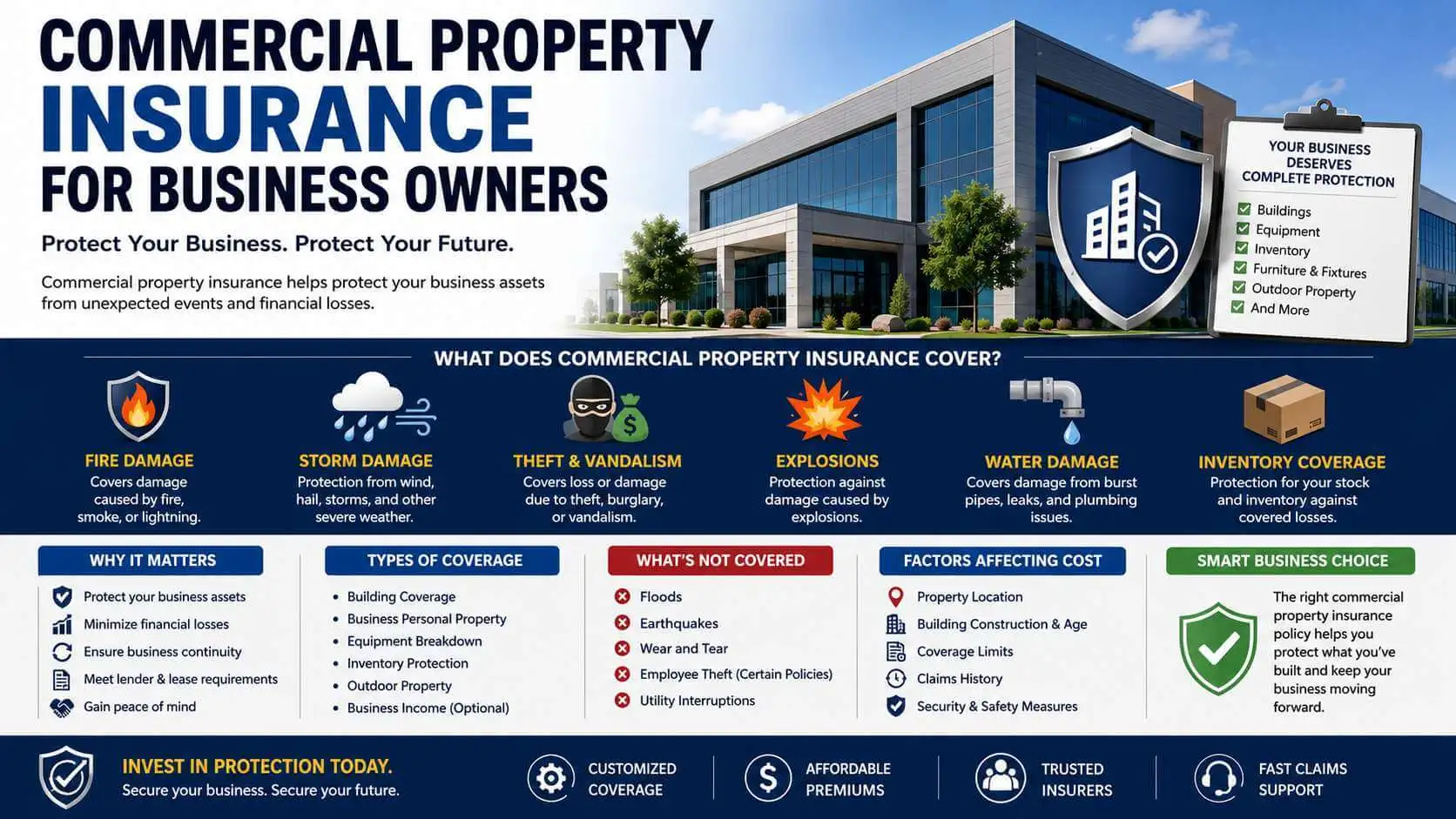
Every business owner invests significant time, money, and effort into building a successful company. Whether you own a retail store, office building, warehouse, restaurant, or manufacturing facility, protecting your physical assets is essential. This is where commercial property insurance becomes one of the most important investments a business can make.
Commercial property insurance helps protect businesses from financial losses caused by unexpected events such as fires, theft, vandalism, storms, and certain natural disasters. Without proper coverage, a single incident could result in devastating financial consequences that threaten the survival of a company.
In this comprehensive guide, you’ll learn everything business owners need to know about commercial property insurance, including coverage options, benefits, costs, exclusions, and how to choose the right policy for your business.
What Is Commercial Property Insurance?
Commercial property insurance is a type of business insurance that protects physical assets owned by a company. The policy helps cover repair or replacement costs when covered property is damaged, destroyed, or stolen.
Protected assets may include:
- Commercial buildings
- Office spaces
- Equipment and machinery
- Furniture and fixtures
- Inventory and stock
- Computers and technology
- Tools and supplies
- Outdoor signs
Whether you own or lease a business location, commercial property insurance provides valuable financial protection against unexpected losses.
Why Business Owners Need Commercial Property Insurance
Every business faces risks. Fires, severe weather, theft, and accidents can happen at any time.
A quality commercial property insurance policy helps business owners:
- Protect business investments
- Minimize financial losses
- Maintain business continuity
- Satisfy lender requirements
- Meet lease obligations
- Protect company assets
Without commercial property insurance, businesses may have to pay significant repair and replacement costs out of pocket.
What Does Commercial Property Insurance Cover?
Coverage varies by insurer and policy, but most commercial property insurance plans include protection for several types of business property.
Building Coverage
If your business owns a building, the policy may cover damage caused by:
- Fire
- Lightning
- Windstorms
- Hail
- Vandalism
- Explosions
Building coverage helps pay for repairs or reconstruction after a covered loss.
Business Personal Property
Business personal property includes items used in daily operations.
Examples include:
- Desks
- Chairs
- Computers
- Inventory
- Machinery
- Electronics
A commercial property insurance policy can help replace damaged or stolen items.
Equipment Protection
Many businesses rely heavily on equipment and machinery.
Coverage may include:
- Manufacturing equipment
- Kitchen appliances
- Medical devices
- Production tools
- Office equipment
Replacing expensive equipment without insurance can create serious financial challenges.
Inventory Coverage
Inventory often represents a significant portion of business assets.
Commercial property insurance may help cover losses resulting from:
- Fire damage
- Theft
- Storm damage
- Vandalism
This protection is especially important for retailers, wholesalers, and distributors.
Outdoor Property Coverage
Many policies extend protection to:
- Fences
- Signs
- Landscaping
- Outdoor storage units
Business owners should review policy details to understand coverage limits.
What Is Not Covered by Commercial Property Insurance?
Although commercial property insurance offers broad protection, some events are typically excluded.
Common exclusions include:
Flood Damage
Most policies do not cover flood-related losses.
Businesses in flood-prone areas may need separate flood insurance.
Earthquakes
Earthquake damage often requires additional coverage.
Wear and Tear
Normal aging and maintenance issues are generally not covered.
Employee Theft
Some policies exclude employee dishonesty unless special endorsements are added.
Utility Interruptions
Power outages originating off-site may require additional coverage options.
Understanding exclusions helps business owners avoid costly surprises.
Types of Commercial Property Insurance Policies
Basic Form Coverage
Basic policies protect against a limited list of specified risks.
Examples include:
- Fire
- Lightning
- Explosions
- Smoke damage
These policies are generally less expensive but provide narrower protection.
Broad Form Coverage
Broad form coverage expands protection by including additional risks.
Examples may include:
- Falling objects
- Water damage from plumbing systems
- Structural collapse
Many business owners choose broad form policies for greater protection.
Special Form Coverage
Special form coverage provides the broadest protection.
Rather than listing covered risks, these policies generally cover all causes of loss except specifically excluded events.
Many experts recommend special form commercial property insurance for comprehensive protection.
How Much Commercial Property Insurance Do You Need?
Coverage needs vary depending on several factors.
Consider:
Property Value
Calculate the replacement cost of buildings and equipment.
Inventory Levels
Businesses with large inventories require higher coverage limits.
Business Type
A manufacturing facility typically needs more coverage than a small consulting office.
Location Risks
Weather conditions and crime rates can influence coverage requirements.
Working with an insurance professional can help determine appropriate limits.
Factors Affecting Commercial Property Insurance Costs
Several variables influence commercial property insurance premiums.
Property Location
Areas with higher crime rates or severe weather risks often have higher premiums.
Building Age
Older buildings may cost more to insure.
Construction Materials
Fire-resistant materials can reduce insurance costs.
Coverage Limits
Higher coverage amounts generally increase premiums.
Claims History
Businesses with frequent claims may pay higher rates.
Safety Measures
Security systems, fire alarms, and sprinklers can help lower premiums.
Ways to Lower Commercial Property Insurance Costs
Business owners can often reduce insurance expenses through proactive risk management.
Improve Building Security
Install:
- Security cameras
- Alarm systems
- Access control systems
Upgrade Fire Protection
Fire suppression systems can lower risk.
Bundle Insurance Policies
Many insurers offer discounts for combining policies.
Increase Deductibles
Higher deductibles may reduce premium costs.
Review Coverage Annually
Regular reviews ensure businesses avoid paying for unnecessary coverage.
Commercial Property Insurance vs General Liability Insurance
Many business owners confuse these two policies.
Commercial Property Insurance
Protects physical assets owned by the business.
Examples:
- Buildings
- Equipment
- Inventory
General Liability Insurance
Protects against third-party claims involving:
- Bodily injury
- Property damage
- Legal expenses
Most businesses benefit from carrying both types of insurance.
Choosing the Right Commercial Property Insurance Provider
When comparing insurance companies, evaluate:
Financial Strength
Choose insurers with strong financial ratings.
Coverage Options
Look for flexible policies that meet your business needs.
Customer Service
Reliable claims support is essential during emergencies.
Claims Process
Fast claims handling helps businesses recover quickly.
Industry Experience
Some insurers specialize in specific industries and understand unique risks.
Conclusion
Commercial property insurance is a critical safeguard for business owners seeking to protect their physical assets and financial stability. From buildings and equipment to inventory and technology, the right policy can help businesses recover from unexpected losses and continue operations with minimal disruption.
Investing in comprehensive commercial property insurance not only protects valuable assets but also provides peace of mind. By understanding coverage options, evaluating risks, and selecting the right insurer, business owners can create a strong foundation for long-term success.
Frequently Asked Questions (FAQs)
1. What does commercial property insurance cover?
Commercial property insurance typically covers buildings, equipment, inventory, furniture, and other business assets against covered risks such as fire, theft, vandalism, and certain weather events.
2. Is commercial property insurance required by law?
Generally, it is not legally required, but lenders, landlords, and lease agreements often require businesses to carry coverage.
3. How much does commercial property insurance cost?
Costs vary based on property value, location, business type, coverage limits, and risk factors.
4. Does commercial property insurance cover natural disasters?
Some disasters may be covered, but floods and earthquakes often require separate policies.
5. Can renters get commercial property insurance?
Yes. Businesses leasing space can obtain coverage for equipment, inventory, and other business property they own.
6. How do I choose the best commercial property insurance policy?
Compare coverage options, exclusions, limits, deductibles, customer reviews, financial strength ratings, and pricing before selecting a policy.