Your credit score plays a crucial role in your financial life. Whether you’re applying for a mortgage, car loan, personal loan, or credit card, lenders use your credit score to determine your creditworthiness. A higher credit score can help you qualify for lower interest rates, better loan terms, and increased borrowing power.
If you’re wondering how to improve your credit score fast, you’re not alone. Millions of Americans are looking for effective ways to boost their credit ratings and improve their financial standing. While building excellent credit takes time, there are several proven strategies that can help improve your credit score faster than you might think.
In this guide, you’ll learn practical and actionable steps to improve your credit score quickly and maintain long-term financial success.
What Is a Credit Score?
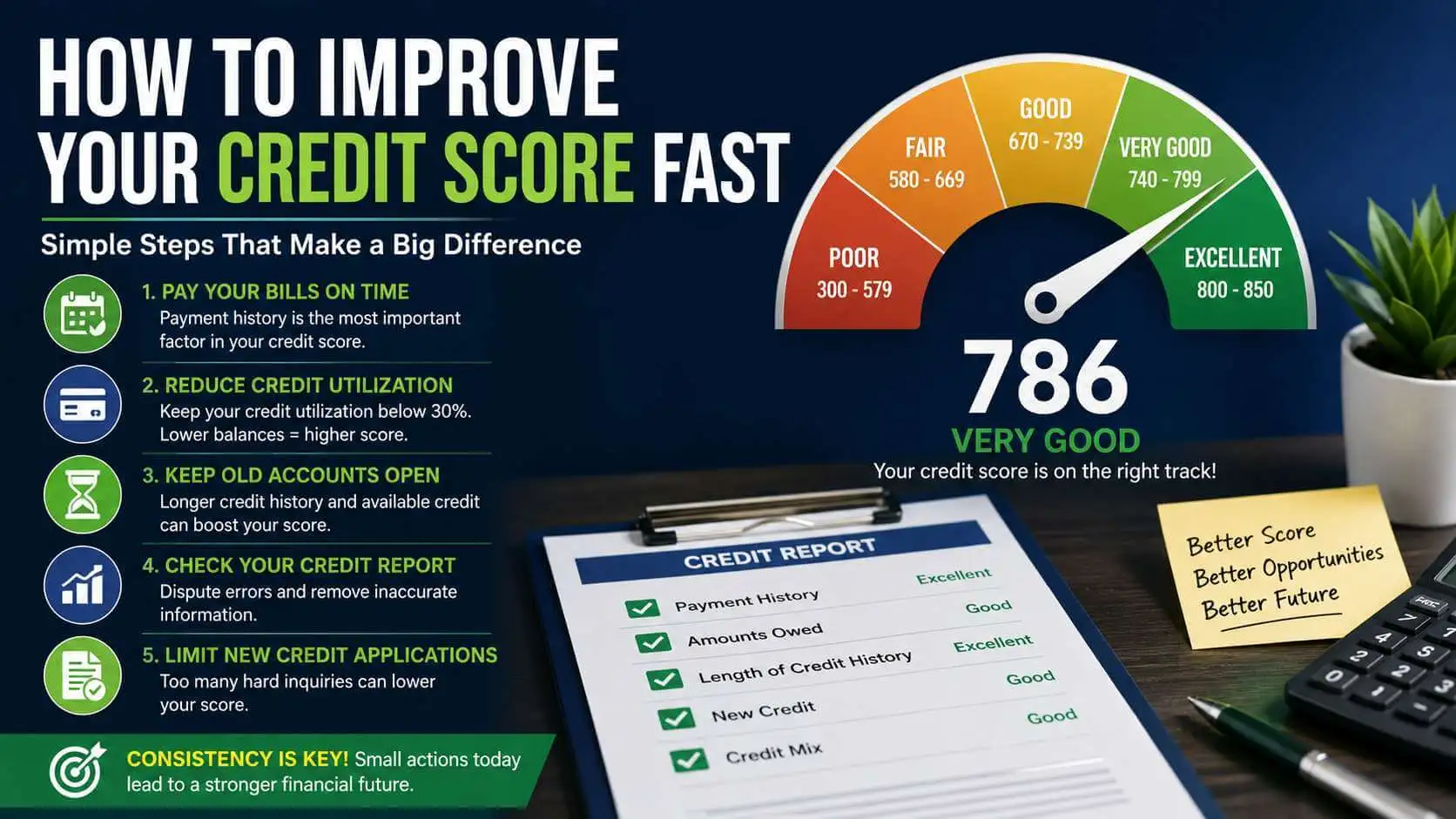
A credit score is a three-digit number that represents your credit risk. Most credit scores range from 300 to 850.
General credit score ranges include:
- Excellent: 800-850
- Very Good: 740-799
- Good: 670-739
- Fair: 580-669
- Poor: 300-579
Understanding your current credit score is the first step toward improving it.
Why Your Credit Score Matters
Your credit score affects many areas of your financial life, including:
- Mortgage approvals
- Auto loans
- Personal loans
- Credit card approvals
- Interest rates
- Apartment rentals
- Insurance premiums
- Employment background checks
A higher credit score can save you thousands of dollars over the life of a loan.
Check Your Credit Reports First
Before trying to improve your credit score, obtain copies of your credit reports from all three major credit bureaus.
Review your reports carefully for:
- Incorrect personal information
- Duplicate accounts
- Fraudulent activity
- Incorrect late payments
- Outdated negative information
Errors on your credit report can significantly lower your credit score. Disputing inaccuracies may provide a quick credit score increase.
Pay Your Bills on Time
Payment history is the most important factor affecting your credit score. It accounts for approximately 35% of most credit scoring models.
To improve your credit score fast:
- Pay every bill before the due date
- Set up automatic payments
- Use calendar reminders
- Catch up on overdue accounts immediately
Even one missed payment can negatively impact your credit score for years.
Reduce Your Credit Utilization Ratio
Credit utilization refers to the amount of available credit you’re using.
For example:
- Credit limit: $10,000
- Balance: $3,000
- Utilization ratio: 30%
Experts recommend keeping utilization below 30%, and ideally below 10%.
To improve your credit score quickly:
Pay Down Existing Balances
Reducing credit card debt is one of the fastest ways to improve your credit score.
Make Multiple Payments Monthly
Instead of waiting for the due date, make payments throughout the month to keep balances low.
Request Higher Credit Limits
A higher limit can reduce utilization if spending remains unchanged.
Avoid Closing Old Credit Accounts
Many people mistakenly close older credit cards after paying them off. However, this can hurt your credit score.
Older accounts contribute to:
- Credit history length
- Average account age
- Available credit
Keeping older accounts open can help improve your credit score over time.
Become an Authorized User
One of the fastest ways to improve your credit score is becoming an authorized user on a trusted family member’s credit card.
If the primary cardholder has:
- Excellent payment history
- Low balances
- Long account history
Their positive credit activity may be added to your credit profile and boost your credit score.
Pay Off Collection Accounts
Collection accounts can severely damage your credit score.
Contact collection agencies to:
- Negotiate settlements
- Request pay-for-delete agreements when possible
- Resolve outstanding balances
Removing collection accounts may help improve your credit score significantly.
Limit New Credit Applications
Every time you apply for new credit, a hard inquiry may appear on your report.
Too many inquiries can lower your credit score temporarily.
To improve your credit score:
- Apply only when necessary
- Space out credit applications
- Avoid multiple loan applications within a short period
Responsible credit behavior helps strengthen your overall profile.
Use a Secured Credit Card
If you have limited or damaged credit, a secured credit card can help rebuild your credit score.
Secured cards require a refundable deposit and report activity to credit bureaus.
To maximize results:
- Make small purchases
- Pay balances in full
- Avoid late payments
Consistent positive activity can steadily improve your credit score.
Diversify Your Credit Mix
Credit scoring models consider the types of credit you use.
A healthy credit mix may include:
- Credit cards
- Auto loans
- Student loans
- Mortgages
- Personal loans
While credit mix is less important than payment history and utilization, it can still help improve your credit score.
Negotiate with Creditors
If you’ve experienced financial hardship, contact creditors directly.
Some lenders may:
- Remove late fees
- Adjust payment plans
- Offer hardship programs
- Report accounts as current after successful repayment arrangements
Positive creditor relationships can support efforts to improve your credit score.
Monitor Your Credit Regularly
Monitoring your credit helps you:
- Track progress
- Identify fraud
- Detect reporting errors
- Stay motivated
Regular monitoring allows you to make adjustments quickly and continue improving your credit score.
Habits That Can Hurt Your Credit Score
Avoid these common mistakes:
Missing Payments
Late payments can remain on your report for up to seven years.
Maxing Out Credit Cards
High utilization ratios negatively affect your credit score.
Frequent Credit Applications
Too many hard inquiries may signal financial distress.
Ignoring Debt
Unpaid debt can lead to collections and lawsuits.
Closing Old Accounts
This can reduce available credit and shorten credit history.
How Long Does It Take to Improve Your Credit Score?
The timeline depends on your specific situation.
General estimates:
- Error correction: 30-60 days
- Lower utilization: 1-2 months
- Consistent on-time payments: 3-6 months
- Major credit rebuilding: 6-24 months
While there’s no overnight solution, following proven strategies can help improve your credit score faster than many people expect.
Conclusion
If you’re looking for ways to improve your credit score fast, focus on the factors that have the greatest impact. Paying bills on time, reducing credit card balances, correcting report errors, and maintaining responsible credit habits can lead to noticeable improvements.
Mesothelioma Lawyer: How to Choose the Best Attorney in the USA
A strong credit score opens doors to better financial opportunities, lower interest rates, and greater financial flexibility. By taking action today and staying consistent, you can build a healthier financial future and achieve your long-term goals.
Frequently Asked Questions (FAQs)
1. What is the fastest way to improve your credit score?
The fastest way to improve your credit score is typically paying down high credit card balances and correcting errors on your credit reports.
2. How much can my credit score increase in 30 days?
Results vary, but some individuals see increases of 20 to 100 points after lowering credit utilization and resolving reporting errors.
3. Does paying off debt improve your credit score?
Yes. Paying off debt lowers your credit utilization ratio and demonstrates responsible financial behavior, which can improve your credit score.
4. Can checking my credit score hurt my credit?
No. Checking your own credit score is considered a soft inquiry and does not affect your credit score.
5. How often should I monitor my credit report?
You should review your credit reports regularly, ideally at least once every few months, to identify errors and monitor progress.
6. Is it possible to improve a poor credit score?
Yes. Consistent on-time payments, debt reduction, and responsible credit use can significantly improve a poor credit score over time.